
Economic and Financial Market Outlook Q4 2026

Global Overview: Caution Signs Emerge Amid Stock Market Strength
The global bull market charged on in the third quarter, completing a four-year run since the lows reached in October 2022. The rally persevered despite the summer events of a prolonged oil shock, rising inflation, and the start of a global monetary tightening cycle. In the third quarter, the price of oil climbed back above $100 per barrel, diesel reached all-time highs, and attacks on Saudi Arabian energy infrastructure continued with no resolution in sight. Central banks around the world have responded to a new wave of inflation by tightening policy, and the cost of borrowing has risen sharply as bond yields have moved decisively higher. All those negative headlines would typically be accompanied by stock market volatility; yet resilient equity markets prevailed once again. Durable growth, powered by an enormous wave of technology investment, continues to lift output, profits, and stock markets. Concerns over these challenges are justified, but we expect them to prove more fleeting than the investment cycle beneath them.
US Economy: Growth Accelerates, Inflation Bites
The US economy produced solid growth of about 2.4% in the first half of the year and appears to be accelerating. The Atlanta Fed GDPNow model placed third-quarter growth at 3.6% as of October 8, with real consumer spending tracking 3.4% and private investment growing at an annualized rate above 20%. We expect a strong second half to lift full-year GDP growth to around 3.0%, above our prior estimate of 2.5%. The AI capital expenditure supercycle is leading the way and spilling into the broader economy. The ISM services PMI has now expanded for 27 consecutive months with a strong September reading of 54.9, and ISM manufacturing posted a healthy 54.5.
While growth is a source of comfort, inflation is a problem. Price pressures broadened in the third quarter well beyond gasoline. CPI rose 3.7% from a year earlier in September and +0.6% for the month, with core prices +0.3%, above consensus. The Fed’s preferred measure of inflation told the same story: PCE inflation ran at 3.4% with core at 3.0%. Upstream prices have accelerated again: the ISM manufacturing prices jumped 6.8 points to 77.9 in September, and no commodity category reported a decline. The squeeze on households has deepened. Wage growth slowed to 3.0% in September, the slowest pace since the pandemic and below the rate of inflation.
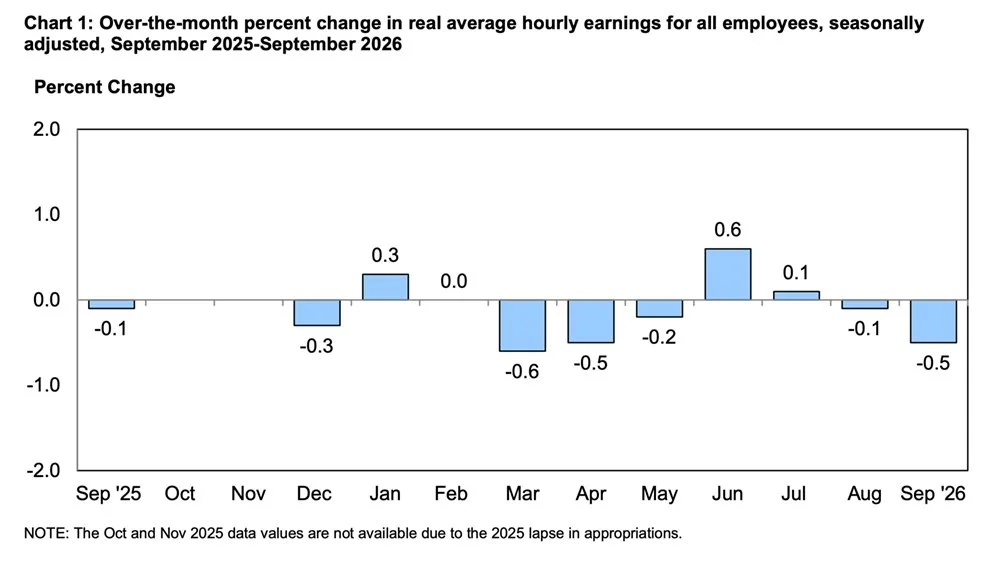
The labor market sits in a fragile place, with low job gains and low unemployment: three-month average job gains sit around 17,000 and unemployment has been steady around 4.2%. This pairing is far from ideal, but also far from recession. In a recent speech, Fed Chair Warsh declared, “the labor side of the Fed’s congressional remit is in good shape.” Two weeks later, the September employment report showed a gain of 29,000 jobs, with July and August revised lower by a combined 60,000. The judgment of the most influential central bank is that the US economy is strong enough to withstand higher interest rates. A stock market making all-time highs would seem to confirm that view, for now.
US Stock Market: Earnings a Pillar, Fighting the Fed?
We expected the Fed to hold the benchmark interest rate steady through the third quarter. Instead, the FOMC raised the federal funds rate by a quarter point, its first increase since 2023. The signal from the Fed is that more hikes are coming imminently, until inflation eases sufficiently back to its 2.0% target. The Fed tightening monetary policy while stock markets sit near all-time highs is our largest concern in the months ahead. Even so, the strongest support for stocks remains corporate earnings, which show no sign of slowing. S&P 500 earnings are projected to grow 32.7% in 2026 on revenue growth of 12.5%, and consensus projects another double-digit year in 2027 at 15.8%. Earnings outpaced returns in the third quarter, pulling the forward price-to-earnings ratio down to 19.0x, below both the 5- and 10-year averages. The most important question regarding this surge in profits is how much of this growth will last beyond a boom-time buildout. The companies driving the enormous investment in technology are the same companies fueling earnings and stock returns, pushing the concentration equity indexes to extremes: the 10 largest companies in the S&P 500 benchmark have a 39.1% weighting and the technology sector has a 39.7% weighting. This rare setup gives us pause; a setback in the AI buildout narrative could magnify a negative response and be felt across the entire market. Prudent investors should remain disciplined and committed to diversification.
International: Inflation and Tightening Are Global
Most advanced economies are confronting price pressures, and their central banks are responding in kind. The European Central Bank and Bank of Japan have raised rates this year, with more anticipated. Surging energy prices fall hardest on the energy importers of Europe and Asia. Renewed concern about sovereign debt levels in France and Spain caused a jump in interest rates. Despite all this, European equities set record highs in August and Japan sits within a few percent of its own highs. International stocks have long been valued for the diversification they provide, yet their markets now exhibit the same phenomenon of AI-leveraged companies leading the advance. Investors seeking true diversification abroad need to discern whether their international holdings are simply another expression of the same trade. Where they are, the diversification is less than it appears.
Bonds: A Looming Bear
US Treasury yields soared in the third quarter. The 10-year yield rose from 4.66% in late August to above 5.3% in early October, the highest level since 2002. Every maturity from 2 to 30 years now sits above its 2025 peak. Chair Warsh offered three explanations: economic strength, competition for capital, and geopolitics. On the second item, he was specific, noting, “the so-called hyperscalers are out in the market raising funding,” which ties directly to the debt-financed AI buildout we flagged last quarter. However, trees don’t grow to the sky. At some point rising yields become an opportunity, and we think that point is approaching.
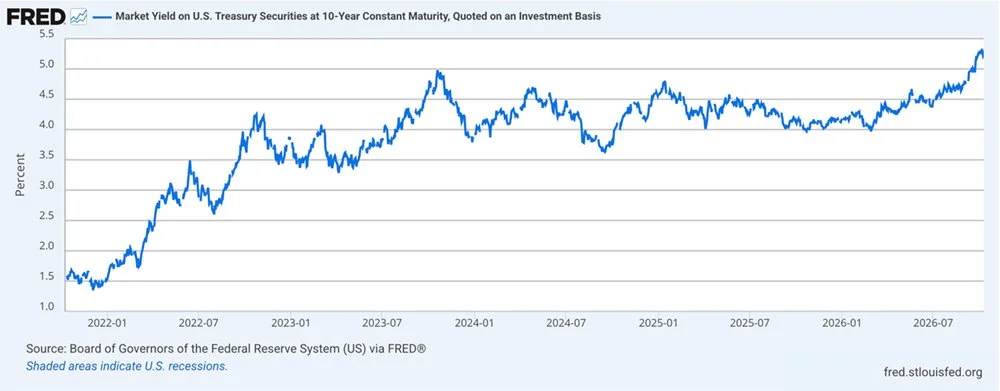
We continue to favor high quality, and we think modestly extending maturity can be considered at these levels. Short-term yields remain attractive as well. Money market yields benefit directly from rate hikes, so the trade-off is between appealing near-term income and the chance to lock in yields above 5.0% before the cycle turns. For the first time in years, that is a trade-off worth taking seriously.
A Finale: The Only Constant is Change
After more than 100 issues, this Outlook is Marietta’s final publication. We have enormous gratitude for our wonderful clients, friends of the firm, and especially our Founder, John T. Evans. We cannot overstate the honor of building on his legacy as owners for the past seven years. While some things change, others will remain the same. Our fierce dedication to our clients will join us as we embark on a new chapter. Time after time in Marietta’s 26 years in business, we have learned key lessons: embrace change, stay focused on fundamentals, and match each client’s needs with a long-term strategy. That approach has paid off in the short, medium, and long term. Marietta joining Annex Wealth Management is an investment to ensure that our clients continue to receive the highest quality services. No one can know the future with precision, but our experience has shown that optimism in uncertain times has proven propitious for investors, while pessimism has left those on the sidelines watching strong returns pass them by. We are as optimistic as ever.